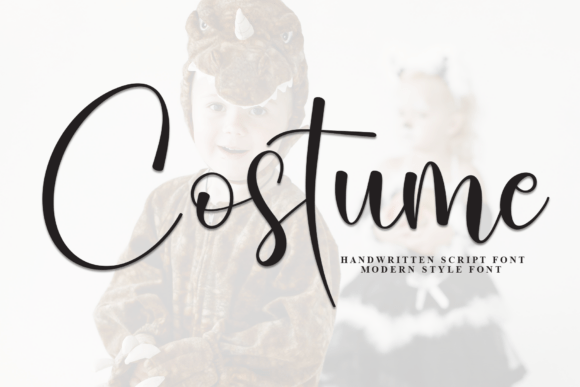
Costume: A Designer’s Take on Its Real-World Use
Opening the Costume font file, the first thing I noticed was its expressive character. Costume carries a distinct personality—playful yet refined, with a touch of vintage flair. It doesn’t scream for attention like many decorative scripts; instead, it invites closer inspection. The letterforms have a soft bounce and organic flow, suggesting a handwritten origin but with polished control. This is a font that feels intentional, not random—ideal for projects where charm and craftsmanship matter more than flash.
First Impressions: Mood, Personality, and Type of Use
Costume gives off a warm, approachable vibe. It reads as personal and thoughtful, like a handwritten note from someone you trust. The baseline rhythm is smooth, and the swashes feel like natural extensions of the letters rather than tacked-on embellishments. It lands somewhere between a formal script and a casual handwritten font—modern enough for contemporary brands but with enough texture to feel artisanal.
I immediately thought of boutique branding, wedding invitations, lifestyle blogs, and premium packaging. Costume doesn’t feel forced or overly styled. It has a quiet confidence that makes it stand out without overwhelming the design.
Real-World Performance: Where Costume Shines
In logo design, Costume holds up well when used sparingly. As a primary mark, it works best for brands that want to feel personable and unique—think local bakeries, indie publishers, or wellness coaches. Its character helps build a memorable brand identity, especially when paired with a clean sans serif for contrast.
Packaging design is where Costume really comes alive. I tested it on mockups for coffee bags, candle labels, and greeting cards. In each case, it added a human touch that elevated the product. It reads clearly at a distance on product labels and maintains legibility even in smaller print sizes, which is a win for shelf appeal.
For editorial design, Costume can be used effectively in subheadings or pull quotes. It adds visual rhythm without disrupting the reading flow. On posters and flyers, especially for creative events or community-driven causes, it brings a sense of warmth and authenticity.
In digital use, Costume works well as a header font on websites and blog graphics. It scales nicely on screen, especially when used in SVG or variable font formats. For social media graphics and digital ads, it brings a custom feel that helps content stand out in crowded feeds.
Printable products like Canva templates, Cricut projects, and Etsy design assets benefit from Costume’s versatility. It adapts well to both laser-cut wood signs and minimalist digital layouts. Merchandise like tote bags, mugs, and stickers also showcase Costume’s strength—it’s distinctive enough to catch the eye but not so busy that it distracts from the product.
Where to Use Costume with Care
Despite its strengths, Costume is not a workhorse font. It’s best reserved for short bursts of text—logos, headlines, quotes, and accents. Using it in long body copy would strain readability, especially in smaller sizes or low-resolution outputs.
In brand marks, Costume performs well when balanced with simpler typographic elements. It should be tested thoroughly in black and white to ensure it doesn’t lose impact without color. Similarly, when used in premium packaging, it should be paired with high-quality materials to match its refined tone.
For social posts, Costume shines when used in featured headlines or callouts, but it should be avoided for captions or long-form text. Supporting text in a clean sans or serif font will maintain hierarchy and readability.
How Costume Impacts Design and Brand Perception
One of Costume’s strongest assets is how it influences brand consistency. Because of its unique character, it becomes a signature element—easily recognizable across different touchpoints. When used consistently, it builds brand recognition and trust, especially in niches where authenticity is valued.
From a visual mood standpoint, Costume leans toward the friendly and creative. It engages audiences by feeling less corporate and more personal. That said, it’s not a one-size-fits-all solution. In overly formal or technical contexts, it might feel out of place. But for brands that want to feel human, approachable, and expressive, Costume can be a powerful ally.
Before committing to Costume in a client or business project, here are a few key tests I recommend:
- Test it in black and white to see how contrast affects legibility.
- Check readability at small sizes—especially for packaging and print materials.
- Try it on real mockups to gauge how it holds up in context.
- Compare uppercase and lowercase usage—some scripts lose charm when forced into all caps.
- Review spacing carefully, especially in logo design. Kerning adjustments may be necessary.
- Pair it with serif, sans serif, script, and display fonts to see how it interacts. Costume pairs particularly well with modern sans serifs and clean slab serifs.
- Confirm commercial licensing before use. Costume is a premium font, so ensure the license covers the intended application—especially for digital products, printable designs, and third-party platforms.
Final Thoughts for Designers and Brand Builders
Costume isn’t just another script font—it’s a design tool that brings character and clarity to the right project. It works best when used with intention, restraint, and awareness of its strengths. Whether you're building a brand identity, designing packaging, or crafting digital assets, Costume adds a layer of personality that’s hard to replicate with more generic typefaces.
If you're looking for a font that feels crafted, not mass-produced, Costume is worth serious consideration. Just remember—it’s a supporting actor in most projects, not the lead. Use it where it can shine, and pair it with stronger structural fonts to create a balanced, professional typographic system.
For designers, brand owners, and digital sellers alike, Costume delivers a fresh take on script typography—modern, expressive, and ready for real-world use.